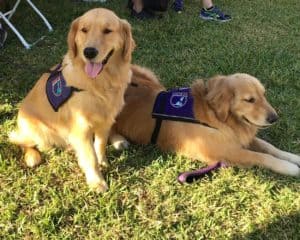
Rules About Service Dogs: What You Need to Know (Without the Confusion)
If you’ve ever searched for rules about service dogs, you’ve probably noticed how confusing the information can get. Between federal law, housing policies, and airline rules, it’s easy to feel overwhelmed.
Let’s simplify it.
Whether you’re a person with a disability, a business owner, or just someone trying to understand your rights, this guide breaks down the real rules in plain language—so you can move forward with confidence.
What Is a Service Animal (Legally Speaking)?
Under the Disabilities Act and guidance from the Department of Justice, a service animal is defined as:
A dog that is individually trained to do work or perform tasks for the benefit of an individual with a disability.
This includes disabilities that are:
- Physical
- Sensory (like low vision or hearing loss)
- Psychiatric (such as post traumatic stress disorder)
- Intellectual or neurological disabilities
So when you hear the phrase “service animal means,” it refers specifically to dogs trained to help with a person’s disability—not just provide comfort.
Are Only Dogs Allowed as Service Animals?

In most cases, yes—only dogs are recognized as service animals under federal law.
However, there’s one exception:
- A miniature horse may be allowed in certain situations if it meets specific criteria (size, behavior, and safety requirements). Miniature horses generally range in size but must still be manageable in public settings.
Other animal species, including cats or birds, are not considered service animals under ADA rules.
What About Emotional Support Animals?
This is where confusion often happens.
Emotional support animals, comfort animals, and companionship animals:
- Are not considered service animals
- Do not need to be trained to perform tasks
- Are not granted the same public access rights
While they can be helpful for emotional support or mental illness, their animal’s presence alone is not enough to qualify under ADA service animal provisions.
Where Are Service Dogs Allowed?
Service dogs are allowed in most public places under Title II and Title III of the ADA, including:
- Restaurants
- Stores
- Hospitals (except restricted areas like a burn unit or sterile environment)
- Public transportation
- Government buildings
- Commercial facilities
These are known as public accommodations and entities covered under federal law.
A service dog can go anywhere the public is allowed—because the handler needs access to obtain goods and services.
Can a Business Ask for Proof or Certification?
No.
Businesses cannot:
- Ask for certification
- Request medical documentation
- Require ID tags
They are allowed to ask only two questions:
- Is the dog a service animal required because of a disability?
- What work or tasks has the dog been trained to perform?
That’s it.
When Can a Service Dog Be Removed?
Even though service dogs have strong legal protections, there are limits.
A business or local government can ask a handler to remove a service dog if:
- The dog shows disruptive behavior
- There are impulsive or destructive behaviors
- The dog poses a direct threat to others
- The dog does not behave properly or is out of control
For example:
- Excessive barking
- Aggression
- Jumping on people
- Ignoring the handler
Service animals must always remain under control.
Housing Rules: The Fair Housing Act
The Fair Housing Act allows individuals with disabilities to live with assistance animals—even in “no pets” housing.
Under this law:
- Service dogs and emotional support animals may both qualify as an assistance animal
- Landlords must provide reasonable accommodations
- Additional pet fees usually cannot be charged
However, documentation may be required in housing situations.
Air Travel Rules: Air Carrier Access Act
Air travel is governed by the Air Carrier Access Act and overseen by Aviation Consumer Protection.
Current rules:
- Airlines must allow trained service dogs
- Emotional support animals are no longer automatically accepted
- Airlines may require forms confirming the dog is trained and behaves properly
This ensures safety for passengers while protecting access for those who rely on service animals.
What Tasks Must a Service Dog Perform?
A service dog must be trained to do work or perform specific tasks that directly support the handler’s disability.
Examples include:
- Guiding individuals with low vision
- Providing physical support for mobility disabilities
- Alerting to medical conditions or prescribed medications timing
- Interrupting anxiety attacks or psychiatric episodes
- Assisting with neurological disabilities
Tasks must go beyond companionship and must provide real, functional support.
Service Dogs vs. Pets: Why the Difference Matters
It’s important to understand that service dogs are not pets.
They are:
- Working animals
- Highly trained
- Essential to a person’s independence
Misrepresenting a pet as a service animal can create challenges for people who truly rely on these dogs.
Key Takeaways (Simple Version)
- A service animal must be trained to perform tasks
- Only dogs (and sometimes miniature horses) qualify
- Emotional support animals are not service animals
- Service dogs have public access rights
- No certification is required
- Dogs must behave properly at all times
- Federal law protects both the handler and the public
Genesis Assistance Dogs, Inc.
For individuals and families in Florida looking for guidance, training, or a professionally trained service dog, Genesis Assistance Dogs, Inc. is here to help.
Our Mission
The mission of Genesis Assistance Dogs Inc. is to provide ability and independence to transform the lives of people with disabilities through the training and placement of highly skilled assistance dogs for children and adults.
Our Vision
Our vision is for people with disabilities to realize their full potential through the dedication, service and companionship of a highly skilled assistance dog.

Genesis Assistance Dogs, Inc. works with individuals across the community—helping create strong, reliable partnerships between service dogs and their handlers.
📞 Contact Number: (561) 329-0277
📧 Email: info@genesisassistancedogsinc.org
Frequently Asked Questions (FAQ)
Are emotional support animals considered service dogs?
No. They provide comfort but are not trained to perform tasks.
Can businesses deny entry to service dogs?
Only if the dog is out of control or poses a safety risk.
Do service dogs need certification?
No official certification is required under federal law.
Can airlines refuse service dogs?
Airlines must allow trained service dogs but may deny untrained or disruptive animals.
What disabilities qualify for a service dog?
Physical, sensory, psychiatric, intellectual, and neurological disabilities may qualify.
Are miniature horses really allowed?
Yes, in some cases, as long as they meet safety and size requirements.