How Long Does It Take to Train a Service Dog? A Realistic Timeline for Families
One of the most common questions families ask is: how long does it take to train a service dog?
The honest answer? It depends.
While some people hope for a quick timeline, proper service dog training is a detailed and structured process. A fully trained service dog typically requires 18 to 24 months of consistent work before they are ready for full public access and real-world service work.
Training a service animal isn’t just about teaching a dog to sit or stay. It’s about building a reliable partner who can assist with specific tasks safely and confidently in everyday life.
Let’s break it down so you know what to expect.
What Impacts Training Time?
 Several factors influence how long it takes to train a service dog:
- The dog’s age
- The dog’s temperament
- The complexity of the tasks required
- Whether you work with professional dog trainers
- Whether you owner train or enroll in service dog training programs
- The dog’s health issues or behavioral issues
Every service dog requires individualized attention. There is no “one-size-fits-all” timeline.
Stage 1: Puppy Foundation (0–6 Months)
If training begins with a puppy, the first months focus on foundational skills.
This includes:
- Potty training
- Crate training
- Socialization with people and other dogs
- Exposure to loud noises
- Learning basic commands
At this stage, the goal is confidence and stability. A dog that struggles with fear or reactivity may not be well suited for service work later.
Many programs prefer breeds like Labrador Retrievers or German Shepherds, but breed alone doesn’t guarantee success. Temperament and health matter more.
Stage 2: Basic Obedience and Manners (6–12 Months)
As the dog matures, formal basic obedience begins.
The dog learns:
- Sit, down, stay
- Loose leash walking
- Recall
- Public access manners
- How to remain calm in busy environments
This stage introduces exposure to public transport, stores, and other real-world settings. Dogs must learn to behave appropriately even around distractions.
Stage 3: Task Training (12–18 Months)
This is where task training becomes serious.
A service dog must perform tasks directly related to a handler’s disability. Examples include:
- Mobility assistance
- Medication retrieval
- Retrieve objects
- Alert to medical issues
- Assist individuals with psychiatric service dogs for anxiety or PTSD
- Support those with physical disabilities
- Guide work similar to guide dogs
The complexity of these specific tasks affects the overall training time.
An emotional support dog does not require task training—but a service dog does. Emotional support alone is not enough under federal laws or the Disabilities Act.
Stage 4: Advanced Training and Public Access Testing (18–24 Months)
 The final stage includes:
- Advanced training refinement
- Public access training in crowded areas
- Exposure to loud noises
- Working in close proximity to strangers
- Passing a public access test
At this stage, the dog must behave appropriately in restaurants, medical offices, schools, and public transport.
Only when the dog consistently demonstrates reliability can they be considered fully trained.
Owner Training vs. Professional Programs
Many owner trainers choose to owner train their own service dog. This is legal, but it often extends the training process.
Working with professional trainers or enrolling in structured service dog training programs can improve consistency and reduce mistakes.
A professional trainer understands:
- Training methods rooted in positive reinforcement
- Behavioral problem-solving
- Long-term training goals
- Matching tasks to a handler’s disability
Even experienced dog owners often benefit from expert guidance.
Can You Train an Adult Dog or Shelter Dog?
Yes—but it depends.
An adult dog or shelter dog may succeed if they:
- Have stable temperament
- Show no significant behavioral issues
- Adapt well to new environments
However, most dogs are not suited for service work. The dog’s age and health issues also matter. Starting with a puppy often provides more control over early socialization.
What About Training Costs?
Training costs vary widely.
Expenses may include:
- Professional dog trainers
- Veterinary care
- Equipment
- Food and grooming
- Ongoing training sessions
- Unexpected vet bills
Remember, service dog training is not just an event—it’s an ongoing relationship throughout the dog’s life.
Why It Takes So Long
Training service dogs is about reliability.
A service dog must:
- Remain calm in stressful environments
- Ignore other dogs
- Perform certain tasks without hesitation
- Respond immediately to their handler
- Work safely in public access situations
Rushing the process can compromise safety.
The goal isn’t speed. It’s stability.
Introducing Genesis Assistance Dogs, Inc.
For families in Florida seeking trained dogs or guidance in the service dog training process, Genesis Assistance Dogs, Inc. is dedicated to transforming lives.
Our Mission
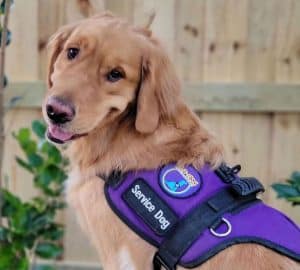 The mission of Genesis Assistance Dogs Inc. is to provide ability and independence to transform the lives of people with disabilities through the training and placement of highly skilled assistance dogs in Florida for children and adults.
Our Vision
Our vision is for people with disabilities to realize their full potential through the dedication, service and companionship of a highly skilled assistance dog.
Genesis Assistance Dogs, Inc. works closely with service dog handlers and families to build confident, reliable service dog teams prepared for long-term success.
📞 Contact Number: (561) 329-0277
📧 Email: info@genesisassistancedogsinc.org
If you’re exploring your options or ready to begin training, we’re here to help.
Frequently Asked Questions
How long does it take to train a service dog from start to finish?
Most fully trained service dogs require 18–24 months.
Can I train my own service dog?
Yes, many owner trainers do. However, working with a professional trainer often improves success rates.
Does every dog qualify for service work?
No. Temperament, health, and behavior determine suitability.
Are emotional support dogs the same as service dogs?
No. Emotional support dogs do not perform trained tasks and do not have public access rights.
Can adult dogs become service dogs?
Sometimes, if they meet temperament and health requirements.
Is service dog training expensive?
Costs vary depending on training methods, professional support, and the dog’s needs.