How to Get a Service Dog in Florida: A Step-by-Step Guide
Quick Summary: Getting a service dog in Florida requires documented disability-related needs and a dog trained to perform specific tasks; a vest, certificate, or online registration does not grant legal status. People can use a nonprofit placement, owner training, adoption, or a vetted private trainer, with nonprofit waitlists often lasting one to three years and private options costing $10,000 to $30,000. Florida does not require state registration, but most counties require a dog license and often waive the fee for service dogs. Genesis Assistance Dogs provides statewide placement, matching, and lifelong support for qualified applicants.
A service dog is not something you buy off a shelf, and no online certificate makes one. In Florida, a service dog earns its legal status through documented training for one handler’s specific disability. The vest means nothing; the training means everything. That is where your rights under Florida Statute 413.08 and the ADA begin.
The hard part is knowing where to start. Most families hit confusing answers about fees, fake registries, and years-long waitlists.
This guide walks through how to get a service dog in Florida, step by step: the three legitimate routes with real costs and timelines, the application and matching process, and the county licensing rules most owners miss. It draws on the experience of Genesis Assistance Dogs, a Florida nonprofit that trains and places service dogs with handlers across the state.
Before You Start: Know What Qualifies and What You Already Have

The ADA Definition: Trained Tasks, Not a Vest
Under the ADA service animal definition, a service dog must be trained to do specific tasks for a disability. Emotional support animals comfort you but need no training. Therapy dogs visit many people. Only a service dog gets public access rights.
Three Things to Gather Before You Apply
First, document your disability from a provider. Second, list the tasks that would help you most. Third, gather medical and lifestyle records. Strong paperwork speeds up any dog placement in Florida, including a Genesis Assistance Dogs application.
Step 1: Confirm Your Disability Qualifies and Map the Tasks You Need
Before you take any other step, answer this question: does your disability, and the help you need for it, match what a service dog exists to do? To get a service dog, you must:
- Have a disability that limits a major life activity.
- Need specific tasks a trained dog can perform.
- Get a dog trained for those tasks.
The ADA definition covers dogs trained to do work or tasks tied to a disability. No certificate makes that true. The training does.
How Organizations Decide If You Qualify
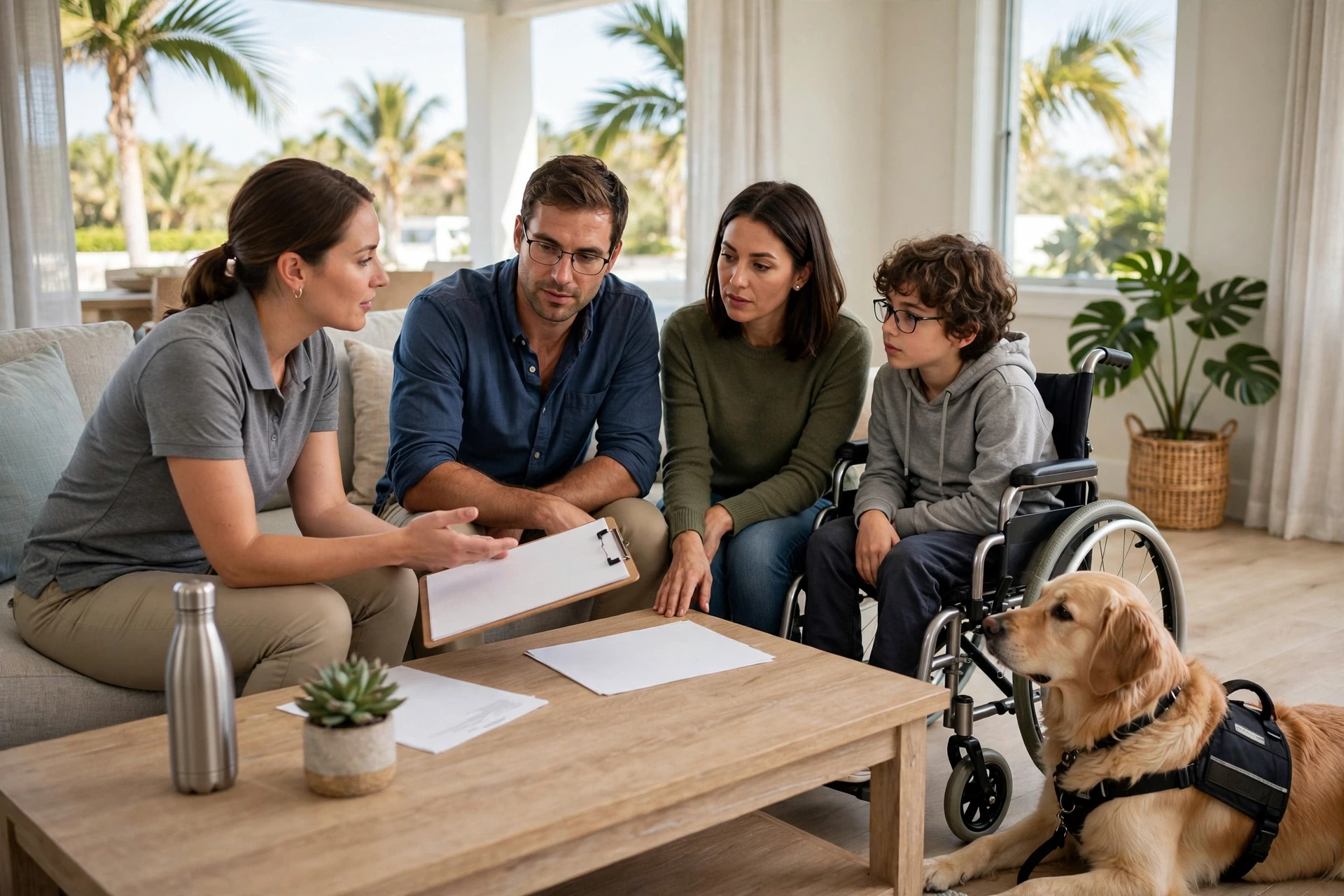
Training programs look at three things. First, a documented disability, usually backed by a letter from your doctor or therapist. Second, whether a dog’s tasks would actually reduce that limitation. Third, whether your home can safely support a working dog. You do not need a specific diagnosis like “mobility” or “PTSD” written on a form. You need proof your limits are real and that trained tasks would help.
Writing Task Descriptions That Trainers Can Use
Keep a two-week log of daily moments you struggle with. Write each one as a problem and a possible fix: “I drop my keys, so I need a dog to retrieve items.” Vague hopes like “calms me down” do not help trainers. Concrete tasks, like deep pressure work or interrupting harmful behavior, do. The screening process, which starts when you apply for an assistance dog, depends on this list.
Step 2: Choose Your Route to a Trained Dog
There are four ways to get a trained service dog in Florida: placement through an assistance dog organization (often little to no cost, 1-3 year wait), owner training with a professional trainer ($5,000-$20,000+, 6-24 months), adopting an already-trained dog (rare, varies), or buying from a private breeder or trainer ($10,000-$30,000, about 1-2 years).
Route One: Professional Placement Through an Assistance Dog Organization
Accredited nonprofits train the dog, match it to your needs, and follow up for life. Waitlists run one to three years, but most charge little or nothing. For dog placement in Florida, Genesis Assistance Dogs trains and places service dogs statewide with lifelong support. Placement teams handle the service dog placement Florida process, from screening through matching.
Route Two: Owner Training and Route Three: Adopting an Existing Dog
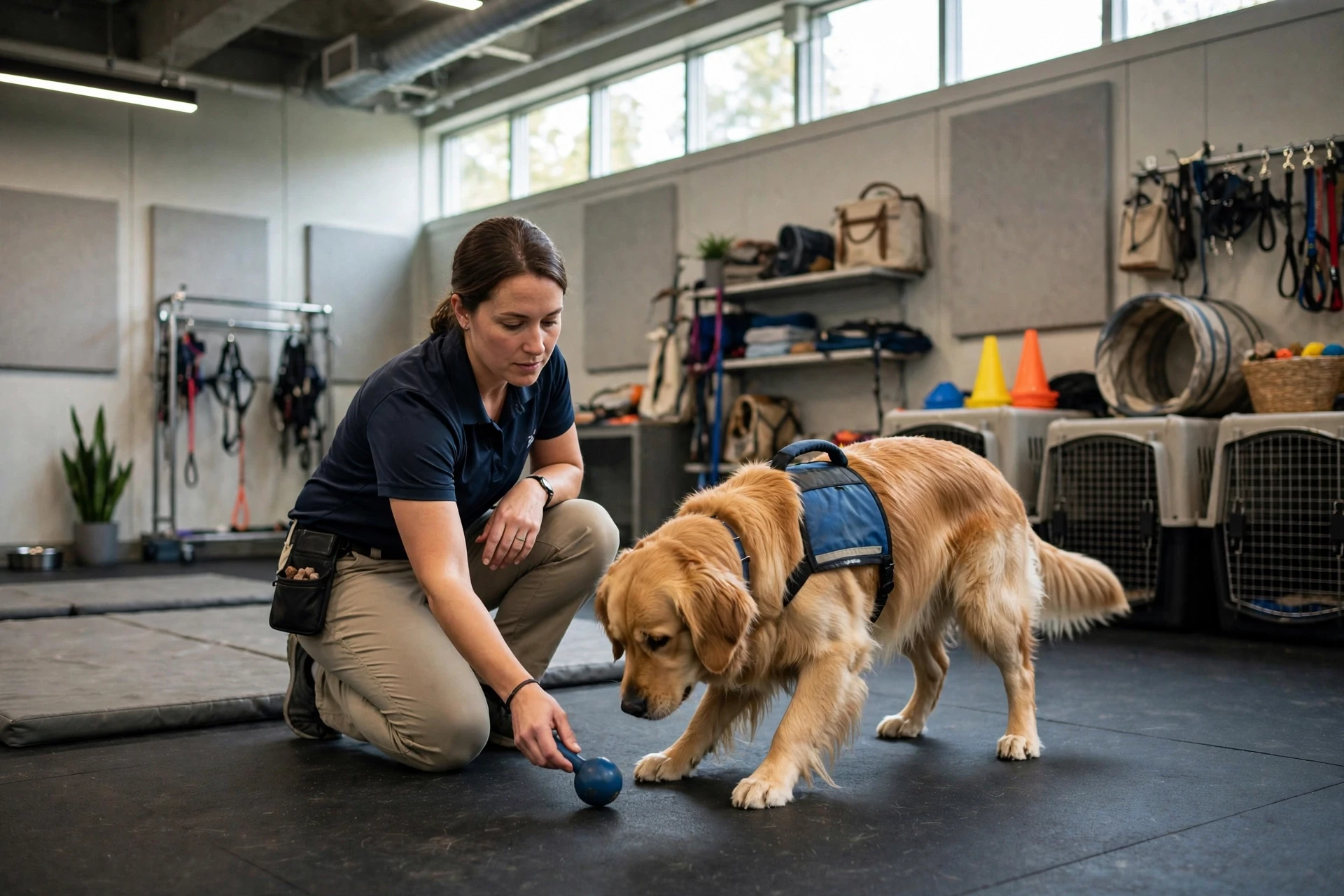
With owner training, you raise and train the dog yourself, often with a professional’s help. Costs range from $5,000 to $20,000 or more, and training takes 6 to 24 months. The ADA allows owner-trained service dogs, but many wash out. Adopting an already-trained dog is rare and usually comes from rehoming situations.
Route Four: Buying From a Private Breeder or Trainer
Private trainers and breeders sell trained dogs for $10,000 to $30,000. Delivery takes about one to two years. Vet any provider carefully: ask for task training proof, health testing, and public access test results before paying anything.
Step 3: Work Through the Application, Screening, and Matching Process
From Application to Interview
Once you pick an organization, expect a written application covering your disability, daily routine, and what tasks a dog must do. Staff may ask for medical references, then hold a phone or in-person interview. Some programs request a home assessment or a video tour. Honest answers here help them decide whether a service dog placement in Florida fits your situation.
Matching, Training, and the First Months Together
Good programs match dogs to handlers by temperament, energy, and the tasks needed, not by order on the waitlist. Teams then complete handler training together, often over several weeks, followed by months of follow-up support. You can see how trainers match dogs with handlers.
What to Do While You Wait
Waitlists run one to three years, so use that time well. Practice handling skills, talk with your doctor about documentation, and check your county’s license fee waiver rules. Some applicants train basic obedience with a private trainer in the meantime, which makes team training easier later.
Step 4: Plan the Costs, Timeline, and Florida Logistics
What You Will Actually Spend
How much does a service dog cost and how long does it take? Here is the short answer:
- Placement through an organization: often free to a few thousand dollars, with a 1-3 year wait
- Owner training: $5,000 to $20,000 or more, and 6 to 24 months of work
- A fully trained dog from a private trainer or breeder: $10,000 to $30,000
Budget for ongoing costs too: food, vet care, and gear often run $1,000 to $2,000 a year. Some Florida nonprofits, including Genesis Assistance Dogs, place dogs at little or no cost to qualified applicants.
Florida-Specific Logistics to Plan For
Start with licensing. Florida does not require service dogs to be registered or certified, but most counties still require a dog license. Many counties waive the fee for service dogs, so ask your county animal services office before you pay.
Then plan for the climate and housing. Heat limits how long your dog can safely work outdoors, so schedule training sessions for early morning. Condos and HOAs must allow service dogs under Florida law, but send your request in writing early to avoid delays. Keep vet and training records together; public access rules under Florida Statute 413.08 protect you, and good documentation makes problems easier to resolve.
Step 5: Registration, Public Access Rights, and Common Mistakes
Do I Need to Register a Service Dog in Florida?
No. Florida has no state registry, and neither Florida Statute 413.08 nor the ADA requires a certificate, ID card, or vest. Registration also does not:
- Prove your dog is trained or qualified
- Create any legal right you don’t already have
- Replace task training or public access work
County tags are different. Most Florida counties require a dog license, and many waive the fee for service dogs. Hillsborough County, for example, lets handlers request a registration tag fee waiver. Ask your county animal services office.
Public Access and the Two Questions Staff May Ask
If your dog’s role isn’t obvious, staff may ask:
- Is this a service dog required for a disability?
- What work or tasks is it trained to perform?
Staff may not demand papers, ask about your disability, or require a demonstration.
Mistakes That Cost People Time and Money
Buying a vest or certificate online proves nothing. Presenting an untrained dog in public can trigger removal, and Florida fines false claims. Skip shortcuts; train real tasks.
A trained service dog can change your daily life, and you don’t have to figure out the path alone. Start your application with Genesis Assistance Dogs and get lifelong, personalized support every step of the way.
Frequently Asked Questions
Q1: How do I get a service dog in Florida?
Confirm your disability qualifies, document the tasks you need, then apply to an accredited organization, hire a trainer, or buy from a vetted breeder. Organizations often cost little and offer lifelong support, but waitlists run one to three years.
Q2: What are the steps to get a service dog in Florida?
Five steps: confirm your disability, map needed tasks, choose a route, complete application and matching, then plan costs, licensing, and public access rights.
Q3: Do I need to register a service dog in Florida?
No. Florida has no registry, and Florida Statute 413.08 requires no certificate. Most counties still require a dog license, often with a fee waiver for service dogs.
Q4: How much does a service dog cost in Florida?
Organization placement is often free to a few thousand dollars. Owner training runs $5,000-$20,000; private trainers charge $10,000-$30,000, plus $1,000-$2,000 yearly for care.
Conclusion
Getting a service dog in Florida comes down to a few core truths. Your disability must limit a major life activity, and a dog must be trained to perform specific tasks that help. No certificate or vest creates that status; training does. Choose your route carefully: nonprofit placement often costs little but waits one to three years, owner training runs $5,000-$20,000, and private trainers charge $10,000-$30,000. Expect a written application, an interview, and a temperament-based match, not a first-come queue. Skip online registries, plan for county licensing, and know your rights under Florida Statute 413.08 and the ADA. Start now by documenting your daily challenges, because that task list drives everything that follows.