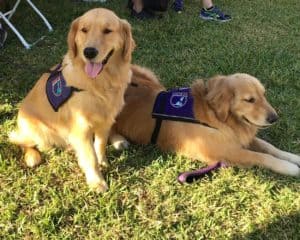
How Assistance Dogs Are Trained and Matched With Handlers
Quick Summary: Assistance dog training takes 18 to 24 months and pairs task work tied to a handler’s disability with public manners, since the ADA only recognizes dogs trained for specific disability-related tasks. Programs screen puppies for health and temperament, wash out unsuitable dogs, and match each dog’s personality to a handler’s lifestyle before a 1-2 week team training class. Accredited programs like those under Assistance Dogs International provide lifetime follow-up, but applicants should vet programs carefully and expect waitlists of a year or more.
A dog that retrieves a dropped phone or alerts to a medical change is not simply well behaved. Every action depends on skills built for one person, through careful assistance dog training and practiced in real settings. The challenge for most families is that they cannot see what happens behind kennel doors: how dog behavior testing sorts future partners, and how service dog matching pairs each dog with the right handler. This guide walks through the full process, from puppy raising to placement to lifelong team support. Programs differ in their methods, so we flag where practices and legal terms vary.
What Assistance Dog Training Is Designed to Achieve
Assistance dog training has one clear goal: produce a dog that performs specific, trained tasks tied to a person’s disability. Under the ADA, a service animal is a dog individually trained to do work or perform tasks for someone with a disability, and the task must connect directly to that disability. Comfort alone does not count. The training, not the dog’s friendly nature, is what makes it a service dog.
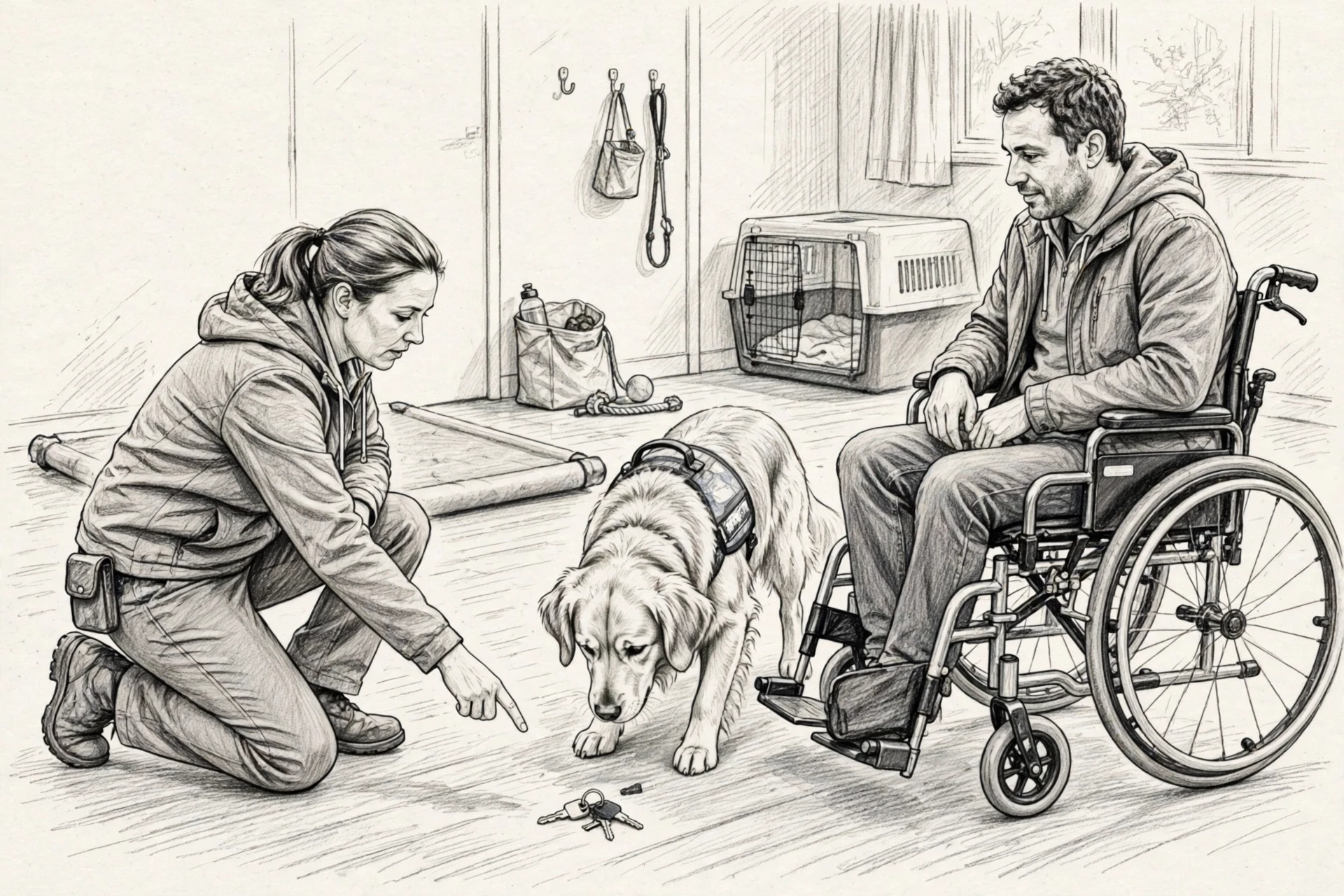
Tasks Are Individualized to the Handler
No two dogs learn the same job list. Training is shaped around one person’s daily needs:
- A wheelchair user might need a dog to retrieve dropped items
- Someone with PTSD might need a dog trained to interrupt an anxiety attack
- A person with epilepsy might need a dog that helps them stay safe during a seizure
Even one solid, trained task can qualify a dog under the ADA. Programs simply match skills to the person.
Training Includes More Than the Task
Task work is only half the curriculum. A dog must also stay calm and controlled in restaurants, stores, and hospitals. The ADA requires that handlers keep service animals under control, usually by leash or harness, so public manners matter as much as task skill. Good assistance dog training builds both: reliable work and steady behavior anywhere the team goes.
Also Read: How to Apply for an Assistance Service Dog in Florida
How Dogs Are Selected and Their Behavior Assessed
Assess Health, Temperament, and Learning
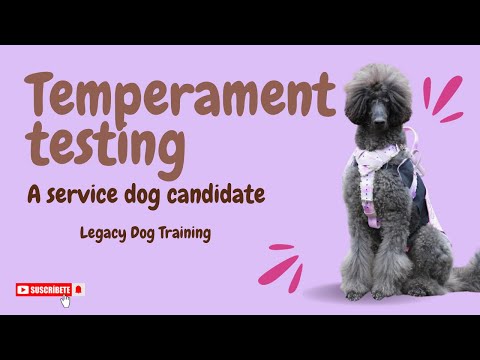
Selection starts long before training. Programs screen for physical health first: hips, elbows, eyes, ears, and heart. Then comes temperament. Trainers watch how a puppy reacts to sudden sounds, new people, odd surfaces, and being handled. A good prospect startles, recovers fast, and gets curious instead of shutting down.
Groups like the International Guide Dog Federation require monthly evaluations covering health, behavior, and physical traits as the dog matures. Common checks include:
- Startle recovery – does the pup bounce back quickly from noise?
- Following – will it quietly trail a person?
- Retrieve interest – a strong sign it wants to work with you
- Calm holding – it should settle, not squirm or nip
Here’s a quick look at how trainers run these early assessments:
Not Every Dog Is Suited to Working
Washout rates are real. A dog that is fearful, reactive to other dogs, or easily distracted rarely finishes service training, no matter how sweet it is. Research on puppy tests also shows mixed results – a review by the Functional Dog Collaborative notes these tests predict some traits but not all adult behavior.
That’s why programs keep assessing at every stage and release dogs early. Genesis Assistance Dogs starts with champion bloodlines and thorough health testing to stack the odds, then lets each dog’s own progress decide its path.
Also Read: 2324
How Training Builds from Foundations to Specialized Work
Service dog training follows a clear path. Puppies learn basics first, then build toward advanced tasks. According to the AKC’s guide to service dog training, this process typically takes one to two years from puppyhood to full certification.
Foundations, Socialization, and Everyday Skills
Early training focuses on temperament and trust. Puppies learn to stay calm around crowds, traffic, and loud noises. They master basic obedience: sit, stay, heel, and come. Programs like Genesis Assistance Dogs raise puppies with champion bloodlines and strict health screening, so the best candidates move forward. Socialization happens everywhere – grocery stores, parks, and elevators. A dog that spooks at a shopping cart cannot do its job later.
Task Practice and Training in Realistic Settings
Once foundations are solid, training shifts to specialized work. Dogs practice tasks their future handler may need: opening doors, retrieving medication, or alerting to medical episodes. Trainers repeat these tasks in public spaces until the dog ignores every distraction. Assistance Dogs International sets standards many programs follow for public access testing and task reliability.
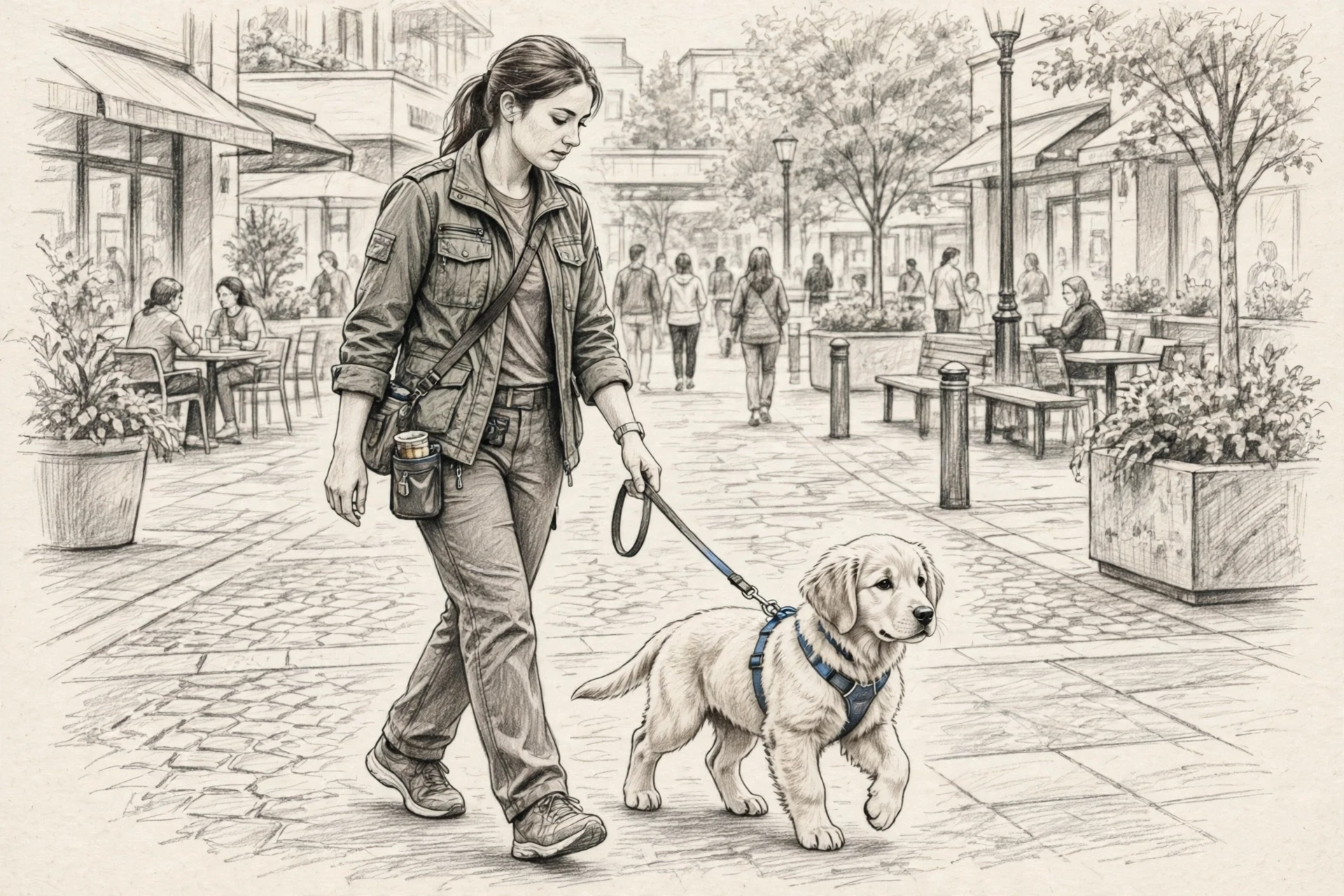
Consistency matters more than speed. A dog that rushes through training often fails public access tests later.
How Service Dog Matching Considers Both Handler and Dog
Good matching works from both ends. Programs like NEADS review applicant profiles and interview clients to learn their needs, lifestyle, and temperament, while trainers watch each dog for 18 to 22 months to learn its personality. Only then do they pair a specific dog with a specific person, according to NEADS.
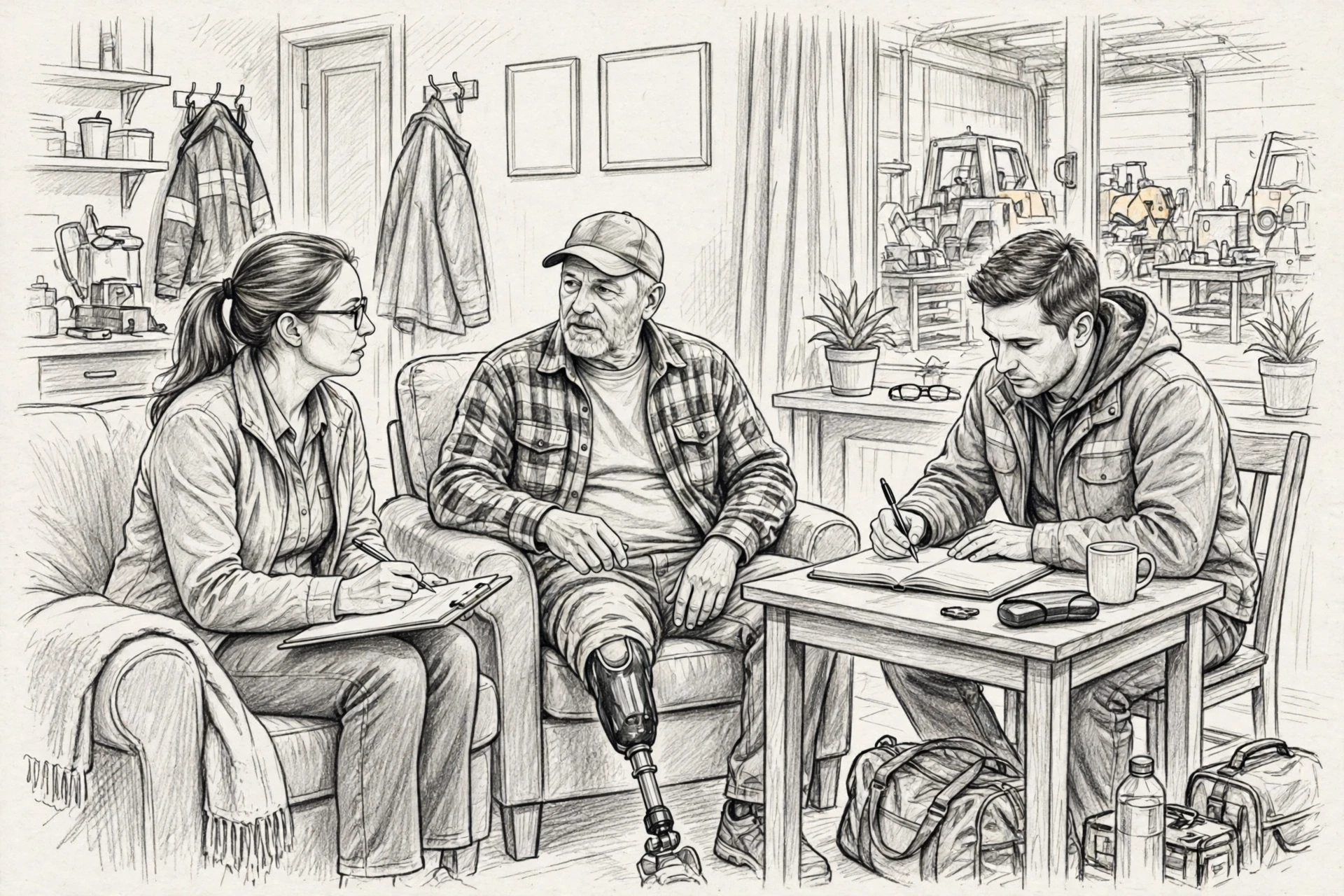
Understand the Handler’s Needs and Daily Context
First, the program learns about you. Expect questions about:
- Your diagnosis and the tasks a dog must perform
- Other pets or small children in the home
- Work, hobbies, and how active you are
- Places you go and how much the dog will travel
Programs such as Guardian Angels Medical Service Dogs stress honesty here. If you work near loud machines, a noise-sensitive dog is the wrong fit. Missing details can place a dog in a home where distraction or tension hurts its ability to assist, per Guardian Angels Medical Service Dogs.
Compare Needs with a Dog’s Strengths
Next, trainers match that profile to what each dog actually does well. A calm, steady dog suits a quiet home. A confident, high-energy dog fits an active handler. The right pairing means both the handler’s needs and the dog’s own temperament get met.
Also Read: Home
Team Training, Timeline, and Continued Support
Handlers Learn Alongside Their Dogs
Placement is not a handoff. You and your dog train together as a team, usually during a class that runs one to two weeks at the program’s facility. You learn how dogs think, how to give cues, and how to handle daily routines like feeding, grooming, and car transfers. Then you practice real-world outings together. Programs accredited by Assistance Dogs International must teach clients in person, mostly one on one, before placement is final.
Why Training Time Varies
Most working dogs need 18 to 24 months from puppyhood to placement, depending on the tasks involved and how each dog matures. Some programs run short placement classes of one to two weeks; others spread team training out. Your program will explain its own schedule, since practices differ. What stays constant is the follow-up: accredited programs commit to lifetime follow-up and team support, and standards call for regular check-ins during the first year after placement.
| Stage | Typical Length | What Happens |
|---|---|---|
| Dog training | 18 to 24 months | Obedience, public behavior, task work |
| Team class | 1 to 2 weeks | Handler learns cues and care |
| Follow-up | Ongoing, for life | Check-ins and troubleshooting |
Also Read: News
Choosing a Program and Preparing for Placement
Not all programs are equal, so research before you apply. Start with Assistance Dogs International, whose accredited members meet standards for dog care, client screening, and lifetime support. Accreditation isn’t legally required, but experts say it’s a strong signal of quality, and they warn the market is “buyer beware” for families on their own.
When comparing programs, ask:
- Are you accredited by ADI, and when were you last assessed?
- What tasks will my dog be trained for, and how is the match made?
- What are the fees, waitlist length, and service area?
- Can I speak with a past client?
Red flag: any program that rushes your deposit, skips screening, or sells “certification.” A recent fraud case in North Carolina shows why vetting matters.
Once accepted, expect paperwork, medical forms, an interview, and a wait – often a year or more. Good programs ask you plenty of questions too.
Also Read: Resources
Ready to see if an assistance dog could change your daily life? Genesis Assistance Dogs trains and matches service dogs with lifelong support for Florida teams. Start your application today at Genesis Assistance Dogs.
Frequently Asked Questions
Q1: How are assistance service dogs trained and placed?
Programs raise puppies with health-tested breeding, teach obedience and task skills, then match each dog to a handler’s needs. Genesis Assistance Dogs provides lifelong support after placement.
Q2: How long does service dog training take?
Most dogs train for 18 to 24 months before placement, depending on the tasks required.
Q3: What tasks do trained assistance dogs perform?
They retrieve items, open doors, alert to medical events, provide balance support, and interrupt harmful behaviors.
Q4: Does insurance cover an assistance dog?
Rarely. Some veterans’ programs and nonprofits help with costs, so ask programs directly about funding options.
Conclusion
An assistance dog partnership rests on four pillars: roughly 18 to 24 months of training, task work tied directly to your disability, a careful match between dog temperament and your lifestyle, and support that continues after placement. The ADA recognizes a service dog because of that training, not a vest or certificate, as this service dog training overview explains. Programs also expect you to hold up your half: handlers must demonstrate control and know their dog’s tasks under industry minimum standards. Every program differs, so ask detailed questions before applying.