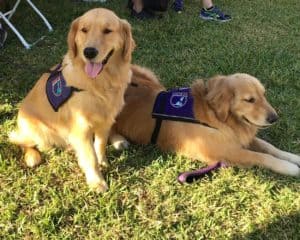
What Training Is Needed for a Service Dog? A Complete Guide for Families and Handlers
If you’ve ever wondered what training is needed for a service dog, you’re not alone. Many families and disabled individuals begin researching service dogs without realizing how much time, structure, and specialized training goes into preparing these remarkable working dogs.
A true service dog is much more than a well-behaved pet. These dogs are highly trained to assist people with a physical or mental impairment, helping them safely navigate daily lives with greater confidence and independence.
From mobility support to medical alert work, service dogs perform life-changing tasks every single day. But before they can help in public settings, they must go through a detailed and carefully planned service dog training process.
Let’s break down exactly what training is needed—and why it matters so much.
What Is a Service Dog?

A service animal is a dog that is individually trained to perform specific tasks related to a person’s disability.
These tasks must directly assist with major life activities, such as:
- Mobility
- Communication
- Medical safety
- Emotional regulation
- Navigating public spaces
This is very different from emotional support animals, whose role is primarily companionship and emotional comfort.
A dog’s mere presence—even if comforting—is not enough to qualify as a service animal under the Disabilities Act.
Not All Dogs Are Suited for Service Work
One of the biggest misconceptions is that any dog can become a service dog. In reality, not all dogs are emotionally or physically suited for the job.
The best service dogs usually have:
- A calm temperament
- Confidence in busy environments
- Ability to ignore distractions
- Good health
- Strong focus and trainability
Popular breeds include:
- Labrador Retrievers
- Golden Retrievers
- German Shepherds
However, many breeds can succeed if they have the right personality and temperament.
Step 1: Basic Obedience Training
Every service dog starts with strong foundational obedience.
Dogs must learn:
- Sit
- Stay
- Come
- Heel
- Down
- Loose leash walking
These basic commands create the structure needed for more advanced training later.
A service dog must also:
- Remain calm around people and other dogs
- Behave appropriately in public settings
- Stay focused despite distractions
- Demonstrate good behavior consistently
Without reliable obedience, a dog cannot safely work in public spaces.
Step 2: Public Access Training
One of the most important parts of service dog training is public access work.
Service dogs must learn how to:
- Walk calmly through busy streets
- Ride public transportation
- Enter commercial facilities
- Stay relaxed in restaurants and stores
- Ignore food, noise, and distractions
This training teaches the dog to remain calm in stressful or crowded situations.
Public access skills are critical because service dogs accompany handlers into everyday environments where considered pets are normally not allowed.
Some dogs also prepare for:
- Air travel
- Hospitals
- Schools
- Medical offices
The dog passes through multiple stages of socialization and exposure before becoming fully reliable in public.
Step 3: Specialized Task Training
After basic obedience and public manners come specialized task training.
This is what officially separates service dogs from therapy dogs or emotional support animals.
Service dogs are trained to perform tasks related directly to the handler’s disability, including:
- Mobility assistance
- Retrieve objects
- Medical alert for blood sugar changes
- Assist during anxiety attacks or panic attacks
- Physical assistance with balance
- Guide work for visually impaired individuals
Psychiatric service dogs may help individuals with:
- PTSD
- Anxiety disorders
- Developmental disabilities
- Other mental impairment conditions
Each service dog learns a specific job based on the handler’s needs.
Step 4: Advanced Training and Real-World Practice
Once task training begins, dogs continue practicing in real-world environments.
This includes:
- Crowded public settings
- Loud environments
- Public transportation
- Community events
- Busy shopping areas
Dogs require repeated exposure and reinforcement to remain reliable.
The goal is to create:
- Well trained dogs
- Strong public behavior
- Reliable task performance
- Confidence under pressure
A highly trained service dog must remain focused even when distractions happen around them.
What About Service Dog Certification?
There is no official federal service dog certification legally required in the United States.
Businesses and local governments generally cannot demand proof or certification.
However, service dog requirements still exist:
- The dog must be trained to perform tasks
- The tasks must relate to the handler’s disability
- The dog must behave appropriately in public
Some handlers choose to wear vests or identification gear, but service dogs are not legally required to wear vests.
Emotional Support Animals vs. Service Dogs
This distinction matters.
Emotional Support Animals
- Provide comfort and companionship
- Are not trained for task work
- Do not have public access rights
Service Dogs
- Trained to perform tasks
- Protected under disability laws
- Allowed in public accommodations
A dog that only provides emotional support is not considered a service dog under federal law.
How Long Does Training Take?
Most dogs require:
- 18–24 months of training
- Ongoing reinforcement throughout life
- Continued practice in real-world situations
Training costs vary depending on:
- Professional training
- Medical training needs
- Equipment
- Veterinary care
- The complexity of the dog’s tasks
The process is a long-term investment in safety, independence, and quality of life.
Why Proper Training Matters
A service dog becomes part of someone’s everyday life.
These dogs help disabled individuals:
- Gain confidence
- Increase independence
- Navigate public spaces safely
- Handle medical conditions
- Improve emotional stability
When properly trained, service dogs can make an enormous difference in a handler’s ability to live independently and participate more fully in the world around them.
For individuals and families in Florida looking for trusted service dog training and placement support, Genesis Assistance Dogs, Inc. is dedicated to changing lives through highly skilled assistance dogs.
Our Mission
The mission of Genesis Assistance Dogs Inc. is to provide ability and independence to transform the lives of people with disabilities through the training and placement of highly skilled assistance dogs in Florida for children and adults.
Our Vision
Our vision is for people with disabilities to realize their full potential through the dedication, service and
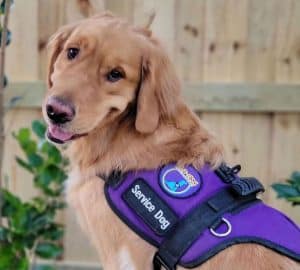
companionship of a highly skilled assistance dog.
Genesis Assistance Dogs, Inc. works closely with handlers and families to create strong service dog partnerships built on trust, reliability, and compassion.
📞 Contact Number: (561) 329-0277
📧 Email: info@genesisassistancedogsinc.org
Frequently Asked Questions (FAQ)
What training does a service dog need?
Service dogs need obedience training, public access training, and specialized task training related to a disability.
How long does service dog training take?
Most service dogs require 18–24 months of consistent training.
Can emotional support animals become service dogs?
Only if they are individually trained to perform specific tasks related to a disability.
Are service dogs required to wear vests?
No. Wearing vests is optional and not legally required.
Can any dog become a service dog?
No. Temperament, health, and trainability all matter.
What tasks can service dogs perform?
Tasks may include mobility assistance, medical alerts, retrieving objects, psychiatric support, and guide work.