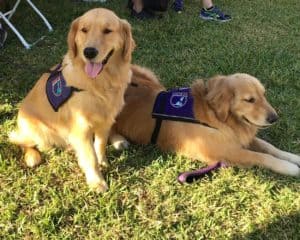
Service Dog Responsibilities: What Handlers, Businesses, and the Public Should Know
Having a service dog can change a person’s life. A well-trained service dog can help someone with a physical disability, mental disability, or other condition become more independent and participate more fully in everyday activities.
But with the benefits of having a service dog come important service dog responsibilities.
A service dog is a working animal, not simply a pet that happens to accompany its owner. The handler has responsibilities related to the dog’s care, behavior, and safety. Businesses and the public also have responsibilities when interacting with a service animal.
Understanding these responsibilities can help create a better experience for everyone involved.
What Is a Service Dog?
Under the Americans with Disabilities Act, a service animal generally means a dog that is individually trained to perform tasks for a person with a disability.
A service  dog may be trained to:
- Retrieve objects or dropped items
- Open doors
- Provide mobility assistance
- Alert to certain medical conditions
- Retrieve prescribed medications
- Interrupt an anxiety attack
- Assist someone experiencing symptoms related to post traumatic stress disorder
- Guide a person who is visually impaired
The important distinction is that the dog must be trained to perform specific tasks directly related to the person’s disability.
A dog that simply makes someone feel better through its presence is generally not considered a service animal under the ADA.
The Responsibilities of a Service Dog Handler
Being a service dog handler is a partnership. While the dog is specially trained to help, the handler also has an important role in maintaining that partnership.
Here are some of the most important responsibilities.
1. Keep the Service Dog Under Control
One of the most important responsibilities is maintaining control of the dog.
A service dog should generally be:
- Calm
- Focused
- Responsive to the handler
- Appropriately behaved
- Under control in public
The handler should be able to manage the dog using a leash, harness, or other appropriate control method unless the person’s disability prevents the use of these tools or they interfere with the dog’s work.
A trained service animal is expected to behave appropriately around people and other animals.
2. Take Responsibility for the Dog’s Behavior
Service dogs are working animals, but they are still dogs.
They may occasionally make mistakes or become distracted. However, handlers are responsible for addressing behavior problems and maintaining the dog’s training.
A service dog should not:
- Bark excessively
- Growl at people
- Jump on strangers
- Wander away from the handler
- Beg for food
- Disrupt other customers
- Show aggressive behavior
If a dog becomes disruptive, the handler should take reasonable steps to regain control.
In certain circumstances, a business may be able to ask that a dog be removed if it is out of control or poses a direct threat to the health or safety of others.
3. Provide Proper Veterinary Care
A service dog cannot do its job effectively without proper care.
Handlers are responsible for making sure their dogs receive:
- Regular veterinary checkups
- Vaccinations
- Preventive care
- Dental care
- Appropriate nutrition
- Grooming
- Exercise
A healthy working dog is better able to remain active and perform its tasks safely.
Handlers should also watch for signs of pain, illness, or fatigue. The dog’s well-being should always be a priority.
4. Maintain the Dog’s Training
Service dog training doesn’t end when a dog is placed with a handler.
Ongoing practice is an important part of the partnership.
Handlers may need to regularly reinforce:
- Basic obedience
- Public access behavior
- Specific tasks
- Focus around distractions
- Appropriate behavior around other animals
- Task-related skills
Over time, a dog’s skills can become less reliable without continued practice.
The handler and dog should continue working together to maintain the skills developed during the dog’s extensive training.
5. Understand the Dog’s Working Role
One of the biggest challenges for handlers is helping other people understand that a service dog is working.
People may be tempted to:
- Pet the dog
- Call the dog
- Offer food
- Take photographs
- Make noises to get its attention
These actions can distract the dog from its work.
Handlers may need to politely explain that the dog is working and should not be disturbed.
The dog is not being unfriendly. It is simply doing its job.
Responsibilities in Public Places
Service dogs may accompany their handlers in many locations that do not normally allow pets.
Under the Americans with Disabilities Act, this includes many public accommodations, such as:
- Grocery stores
- Restaurants
- Hotels
- Public transportation
- Commercial facilities
- Public facilities
- Retail stores
- Public schools
The exact rules can vary depending on the location and situation, so handlers should understand the relevant federal, state, and local laws.
Businesses must also follow applicable requirements under the ADA and other laws.
Service Dogs in Restaurants and Grocery Stores
A service dog may accompany its handler into areas where customers are normally allowed.
The dog should remain under the handler’s control and should not:
- Sit on tables
- Eat from food-service areas
- Wander through the store
- Disrupt employees or customers
Handlers should also clean up after their dogs when necessary.
Being allowed in public is an important right, but it also comes with the responsibility of being a considerate member of the community.
Service Dogs and Public Transportation
Service dogs may generally accompany their handlers on public transportation.
The dog should remain under control and should not block aisles or interfere with other passengers.
Handlers should be prepared to manage their dog’s behavior in crowded environments.
This may require additional training for:
- Buses
- Trains
- Subways
- Airports
- Other forms of public transportation
Public access training helps dogs learn how to remain calm in these environments.
Service Dogs and Air Travel
Air travel involves additional considerations.
The Air Carrier Access Act provides protections for individuals with disabilities who travel by air with service dogs. Airlines may have specific procedures and documentation requirements.
The Aviation Consumer Protection Division provides information about air travel accessibility and airline requirements.
Before traveling, handlers should check the current requirements of their airline and destination.
It’s also important to consider the dog’s comfort and safety throughout the journey.
Service Dogs in Housing
Housing is another area where the rules can be different from public access.
The Fair Housing Act provides protections for people with disabilities who need an assistance animal as a reasonable accommodation.
Housing providers may have responsibilities that differ from those of businesses covered by the ADA.
Depending on the situation, the term “assistance animal” may include animals that do not meet the ADA’s legal definition of a service animal.
Individuals should understand the specific requirements that apply to their housing situation and consult reliable resources when questions arise.
Service Dogs and Emotional Support Animals
It’s important to understand the difference between service dogs and emotional support animals.
Service Dogs
Service dogs are individually trained to perform tasks related to a person’s disability.
Examples may include:
- Guide work
- Retrieving objects
- Opening doors
- Medical alerts
- Interrupting psychiatric symptoms
Emotional Support Animals
Emotional support dogs and other emotional support animals provide comfort through their presence.
They may help individuals with mental illness or emotional challenges, but they are not necessarily trained to perform specific disability-related tasks.
Therapy Dogs
Therapy dogs are trained to provide comfort and companionship to people in settings such as hospitals, schools, and nursing facilities.
They may work with many people rather than one individual handler.
These differences matter because the legal rights and responsibilities associated with each type of animal are not the same.
What About Miniature Horses?
The ADA generally recognizes only dogs as service animals.
However, there is a limited provision for a miniature horse.
Businesses and other covered entities may have to make reasonable modifications to policies to accommodate miniature horses when appropriate.
Miniature horses generally range in size and may be considered based on factors such as:
- Whether the facility can accommodate the animal
- Whether the animal is housebroken
- Whether it is under control
- Whether its presence creates a legitimate safety concern
Other animals and other species do not generally have the same federal public access protections under the ADA.
Responsibilities of Businesses and the Public
Service dog responsibilities don’t fall entirely on handlers.
Businesses and members of the public also have a role to play.
Businesses should understand the legal protections that apply to service animals and avoid refusing service simply because a person has a service dog.
Under the ADA, covered businesses generally cannot:
- Demand unnecessary medical information
- Require a special certification
- Charge extra pet fees for a service dog
- Refuse access simply because the business has a no-pet policy
In general, staff may ask whether the dog is required because of a disability and what work or task the dog has been trained to perform when the disability or need is not obvious.
Businesses may still enforce legitimate safety requirements that apply to everyone.
Service Dogs in Schools
Public schools have additional responsibilities under federal disability laws, including Title II of the ADA and, depending on the situation, the Individuals with Disabilities Education Act and Rehabilitation Act.
Schools should understand how these laws apply to students with disabilities and service animals.
A service dog may help a student with tasks related to their disability, but schools may have specific procedures for accommodating the student and animal.
Families should work with school administrators to understand the applicable requirements.
What the Public Should Know About Service Dogs
If you see a service dog in public, the best thing to do is usually simple:
Ignore the dog and give the handler space.
Avoid:
- Petting the dog without permission
- Calling its name
- Feeding it
- Taking unnecessary photographs
- Allowing children to approach it
- Trying to distract it
Even a friendly interaction can interrupt a dog that is performing an important task.
Remember, the dog may be helping its handler navigate safely, respond to a medical condition, or manage a disability.
Service Dog Responsibilities Are About Partnership
A service dog is more than a trained animal. It is part of a working partnership.
The handler is responsible for the dog’s care, behavior, and continued training. The dog is responsible for performing the tasks it has been trained to do. Businesses and the public also have responsibilities to respect the rights and needs of people with disabilities.
When everyone understands their role, service dogs can do what they are meant to do: help people live safer, more independent, and more fulfilling lives.
Genesis Assistance Dogs, Inc.
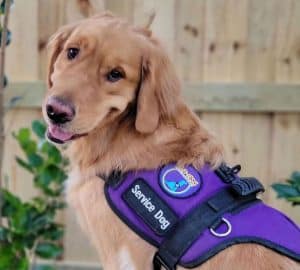
At Genesis Assistance Dogs, Inc., we understand that a highly trained assistance dog can make a meaningful difference in the life of a person with a disability.
The mission of Genesis Assistance Dogs Inc. is to provide ability and independence to transform the lives of people with disabilities through the training and placement of highly skilled assistance dogs in Florida for children and adults.
Our vision is for people with disabilities to realize their full potential through the dedication, service, and companionship of a highly skilled assistance dog.
The relationship between a service dog and its handler is built on trust, training, teamwork, and responsibility. Our goal is to help create partnerships that support greater independence and allow individuals with disabilities to participate more fully in everyday life.
For more information about Genesis Assistance Dogs, Inc., contact us:
Phone: (561) 329-0277
Email: info@genesisassistancedogsinc.org
Frequently Asked Questions About Service Dog Responsibilities
What are the main responsibilities of a service dog handler?
A handler is responsible for the dog’s care, health, behavior, safety, and continued training. The handler must also maintain control of the dog in public.
Does a service dog have to be on a leash?
Generally, service dogs should be harnessed, leashed, or tethered while in public. However, exceptions may apply when a person’s disability prevents the use of these devices or when they interfere with the dog’s work.
Can a business ask me to remove my service dog?
A business may be able to require removal if the dog is out of control and the handler does not take effective action, or if the dog poses a direct threat. A business generally cannot exclude a service dog simply because of a no-pet policy.
Are service dogs allowed in grocery stores?
Generally, yes. Service dogs may accompany their handlers in areas of grocery stores where the public is allowed.
Can people pet a service dog?
People should not pet or distract a service dog without the handler’s permission. A working dog needs to remain focused on its handler.
Are emotional support animals considered service animals?
No. Emotional support animals provide comfort and companionship but are not necessarily trained to perform specific tasks related to a disability.
Do service dogs need to wear a vest?
No. The ADA does not require service dogs to wear a specific vest, harness, or identification.
What should I do if I see a service dog in public?
The best approach is to give the dog and handler space. Don’t pet, feed, call to, or distract the dog unless the handler invites you to interact.
What is the difference between a service dog and a therapy dog?
A service dog is individually trained to perform tasks for a person with a disability. A therapy dog typically provides comfort and companionship to multiple people in settings such as hospitals, schools, and care facilities.