How to Apply for an Assistance Service Dog in the United States
Quick Summary: Applying for a service dog starts with proving your disability and identifying specific trained tasks the dog must perform, since comfort alone doesn’t qualify under the ADA. Choose a provider that trains those exact tasks, gather medical records and daily routine details for the application, and budget for ongoing care beyond the initial cost. Veterans should start with their VA care team, and after placement, businesses can only ask two questions about the dog’s role. The process takes months, so ask providers about waitlists, funding, and follow-up support upfront.
A dog that interrupts a PTSD episode or retrieves dropped medication may meet federal service dog rules. A dog that provides comfort alone does not. Your service dog application starts by naming the disability-related tasks you need.
The process can feel unclear. Service dog requirements under the ADA differ from a provider’s own rules, waitlists, fees, and training standards. Housing, funding, psychiatric service dogs, and veteran programs add more questions.
This guide breaks down each service dog application step in plain English. You will learn how to assess your needs, find a suitable provider, prepare records, seek funding, and plan for daily care. If you are ready to assistance dog apply, clear facts help you avoid costly mistakes.
Step 1: Confirm That a Service Dog Matches Your Needs
Use the Disability-and-Task Test
Ask two direct questions:
- Do you have a physical or mental impairment that substantially limits daily life?
- Can a trained dog perform specific work that reduces that limit?
Under the ADA, a service dog must be trained for a task directly tied to the handler’s disability. ADA guidance includes seizure alerts, item retrieval, medication reminders, and actions that interrupt or lessen a PTSD panic attack.
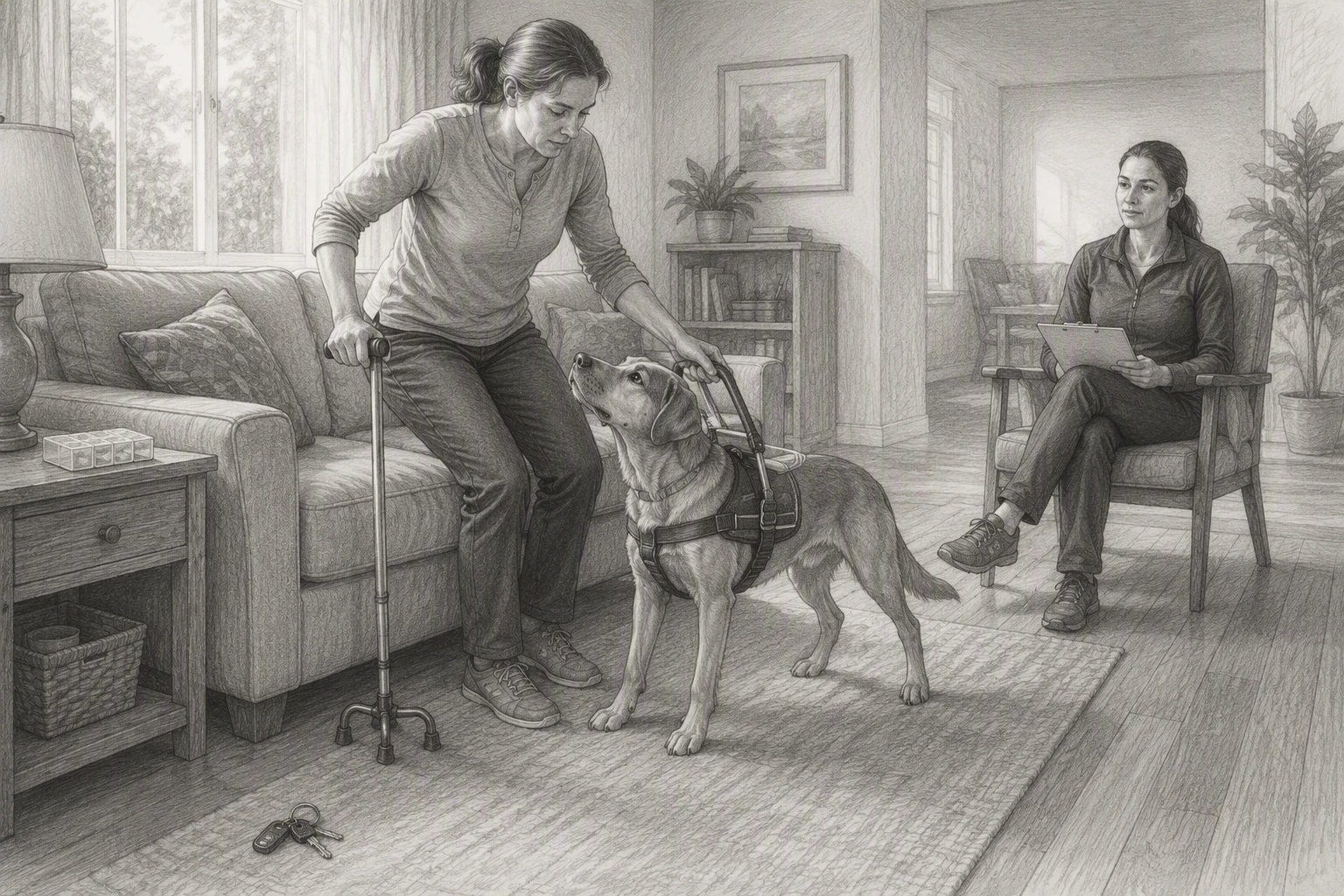
Write down the tasks you need before applying. Be honest about daily care too: feeding, walks, grooming, training practice, and vet visits remain your responsibility.
A service dog supports independence, but it is also a working dog with lifelong needs.
Separate a Service Dog From an ESA or Therapy Dog
| Animal type | Main role | ADA public access |
|---|---|---|
| Service dog | Performs trained disability-related tasks | Generally yes |
| Emotional support animal | Provides comfort through presence | No |
| Therapy dog | Comforts other people in planned visits | No |
An ESA can be deeply helpful, but comfort alone does not meet the ADA service-dog test. A psychiatric service dog may qualify if it takes a trained action during or before an anxiety episode, not simply because it is nearby.
Also Read: 2324
Step 2: Define the Tasks and Type of Assistance Dog You Need
Turn Symptoms Into Concrete Task Goals
Write down what happens during a hard day, then match each barrier to a trained action. Under the ADA, a service dog must do work or tasks directly tied to a disability, not simply provide comfort. See the ADA’s service animal guidance.
| Daily barrier | Possible trained task |
|---|---|
| Dropped items or limited reach | Retrieve objects |
| Panic symptoms | Alert, interrupt, or guide to an exit |
| PTSD episodes | Wake from nightmares or create space |
| Balance problems | Pick up items or provide approved mobility support |

A dog that senses an anxiety attack and takes a trained action may qualify. Comfort from presence alone does not.
Check Whether the Provider Trains That Work
Ask each provider specific questions before you apply:
- Which tasks do you train for my needs?
- How do you match dogs to handlers?
- What follow-up support is included?
- What tasks are outside your program?
Genesis Assistance Dogs can discuss individualized task goals and fit during the placement process. Do not assume every provider trains psychiatric alerts, PTSD tasks, mobility work, or medical alerts.
Also Read: Home
Step 4: Prepare and Submit a Strong Service Dog Application
Gather the Information Programs Commonly Request
Read each program’s form first. Requirements vary, but most ask for:
- Your disability-related needs and the tasks a dog must perform
- A letter or records from a treating provider, if required
- Your daily routine, home setup, work or school plan, and support system
- References, budget details, and your ability to cover food, vet care, and grooming
Be specific about function. A psychiatric service dog needs trained tasks, not comfort alone. The ADA definition requires a dog to perform work directly related to a disability.
Keep copies of every form, letter, and email. Ask the program what is missing instead of guessing.
Expect Interviews, Home Visits, and Team Training
Programs often use interviews and home visits to check fit, safety, and long-term readiness. Answer honestly about mobility, anxiety triggers, other pets, travel, and who can help during illness.
| Stage | What to prepare |
|---|---|
| Interview | Clear examples of tasks you need |
| Home visit | Safe dog area and realistic routine |
| Team training | Time to practice handling and care |
Plan for active ownership. The handler remains responsible for feeding, grooming, toileting, and veterinary care under ADA guidance.
Also Read: Resources
Step 5: Plan for Cost, Funding, and the Waiting Period
Budget for More Than the Dog
A trained dog may involve an application fee, program contribution, travel, and team training. Ask each provider for a written list of costs and what happens if a match does not work out.
Plan for ongoing care too. The handler remains responsible for feeding, grooming, toileting, and veterinary care under ADA guidance.
| Budget area | Plan for |
|---|---|
| Daily care | Food, treats, grooming supplies |
| Health | Routine vet visits, vaccines, preventives, urgent care |
| Equipment | Harness, leash, bed, crate, task gear |
| Training | Follow-up sessions and travel |
A service dog is not a one-time expense. Build an emergency vet fund before placement.
Understand Waitlists and Funding Commitments
Wait times differ by provider, dog supply, training needs, and your readiness to handle the dog. A waitlist is not a promise of placement by a set date.
Ask when funding is due, whether donations change your place in line, and which costs remain yours. Seek grants, veteran benefits, local groups, or fundraising only after you confirm their rules.
The ADA does not require a dog to have professional training or certification, but it must be trained for disability-related tasks to qualify as a service animal. Review the federal definition before paying for any program.
Also Read: Blog
Step 6: Apply Through Veteran Programs and Prepare for Legal Access
Start With the Correct Veteran or Community Pathway
Veterans should start with their VA care team, not a dog provider alone. Ask your primary care, rehab, or mental health provider whether a service dog fits your care plan.
The VA does not place dogs directly. For eligible guide, hearing, and mobility needs, it may support veterinary care, equipment, and approved travel after a clinical review and placement through an accredited program. Read the VA service dog benefit rules before assuming PTSD or anxiety alone qualifies for VA-funded benefits.
- Gather medical records and task goals.
- Ask about caregiver support and long-term dog care.
- Apply to nonprofit programs separately if VA funding does not fit.
A psychiatric service dog can still be a valid service dog under federal access rules, even when a VA benefit does not apply.
Know Which Law Applies After Placement
The ADA protects a trained dog that performs tasks linked to your disability. Emotional comfort by itself is not a trained task.
Businesses may ask only:
- Is the dog required because of a disability?
- What work or task is it trained to perform?
Carry no certificate requirement for public access. Keep the dog house-trained, controlled, and leashed unless a disability or task makes that unsafe. VA facilities allow qualified dogs but may restrict sterile or high-risk care areas, as VA access guidance explains.
Also Read: How to Apply for an Assistance Service Dog in Florida
Frequently Asked Questions
Q1: What are the legal requirements to qualify for a service dog?
You need a disability and a dog trained for tasks that reduce its effects. The ADA does not require registration, certification, or a doctor letter for public access.
Q2: How much does it cost to get a service dog?
Costs vary widely. A fully trained dog may cost thousands of dollars, though nonprofit programs may offer grants, fundraising, or lower-cost placements.
Q3: How to get a service dog for anxiety or PTSD?
Ask a licensed provider to document your disability-related needs. Apply to programs that train psychiatric service dogs for specific tasks, not emotional support alone.
Q4: How long does the application process take?
Expect months or longer. Programs screen applicants, match dogs carefully, require team training, and may have waitlists.
Conclusion
Applying for an assistance service dog takes clear planning. Start with your disability-related needs, then look for a provider whose dogs are trained for specific tasks. Know the difference between a service dog, an emotional support animal, and a therapy dog. The ADA defines a service animal as a dog trained to do work or tasks for a person with a disability.
Funding, wait times, housing requests, and follow-up support vary by program. Ask direct questions, keep your records organized, and make sure you can meet the daily care needs of a working dog.