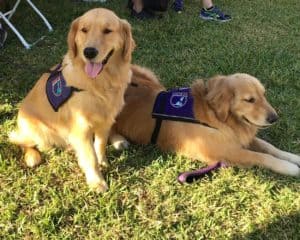
How to Apply for an Assistance Service Dog in Florida
Quick Summary: Florida’s service dog process starts by identifying specific tasks-like retrieving dropped items or interrupting panic attacks-that a dog can perform reliably for your disability, not just providing comfort. You’ll need documentation from a healthcare provider, a clear task list, and a reputable provider like Genesis Assistance Dogs, which matches dogs to needs and offers training support, since wait times average 18–24 months. Avoid scams selling fake certifications or vests; under ADA rules, only task training matters for public access rights. Businesses can’t ask for proof beyond confirming the dog’s role in helping your disability.
A dog may pick up a dropped phone, break up a panic episode, warn of a seizure, or steady you in a Florida grocery store. The first question is not whether it wears a vest. It is which disability-related task it can perform reliably.
Many people struggle to tell whether they Qualify Assistance Dog support, what paperwork a provider needs, and which programs are a good fit. Confusing online claims about IDs and registration can make the process harder.
This guide explains how to assess if you Qualify Assistance Dog placement, define needed tasks, compare providers, plan for wait times and costs, and understand Florida access rules. You will also learn the core Assistance Dog Requirements that matter most. Clear task needs and honest planning help you Qualify Assistance Dog services with confidence.
Step 1: Confirm That a Service Dog Matches Your Need
What Disabilities Can a Service Dog Support?
A service dog can help with physical, sensory, psychiatric, intellectual, or other mental disabilities. The key is a disability-related need and a dog trained for a clear task.
Examples include:
- Guiding a blind handler
- Alerting to sounds or seizures
- Retrieving dropped items
- Helping with balance
- Interrupting panic attacks or reminding a handler to take medication
The task must directly help you manage daily life, as ADA guidance explains.
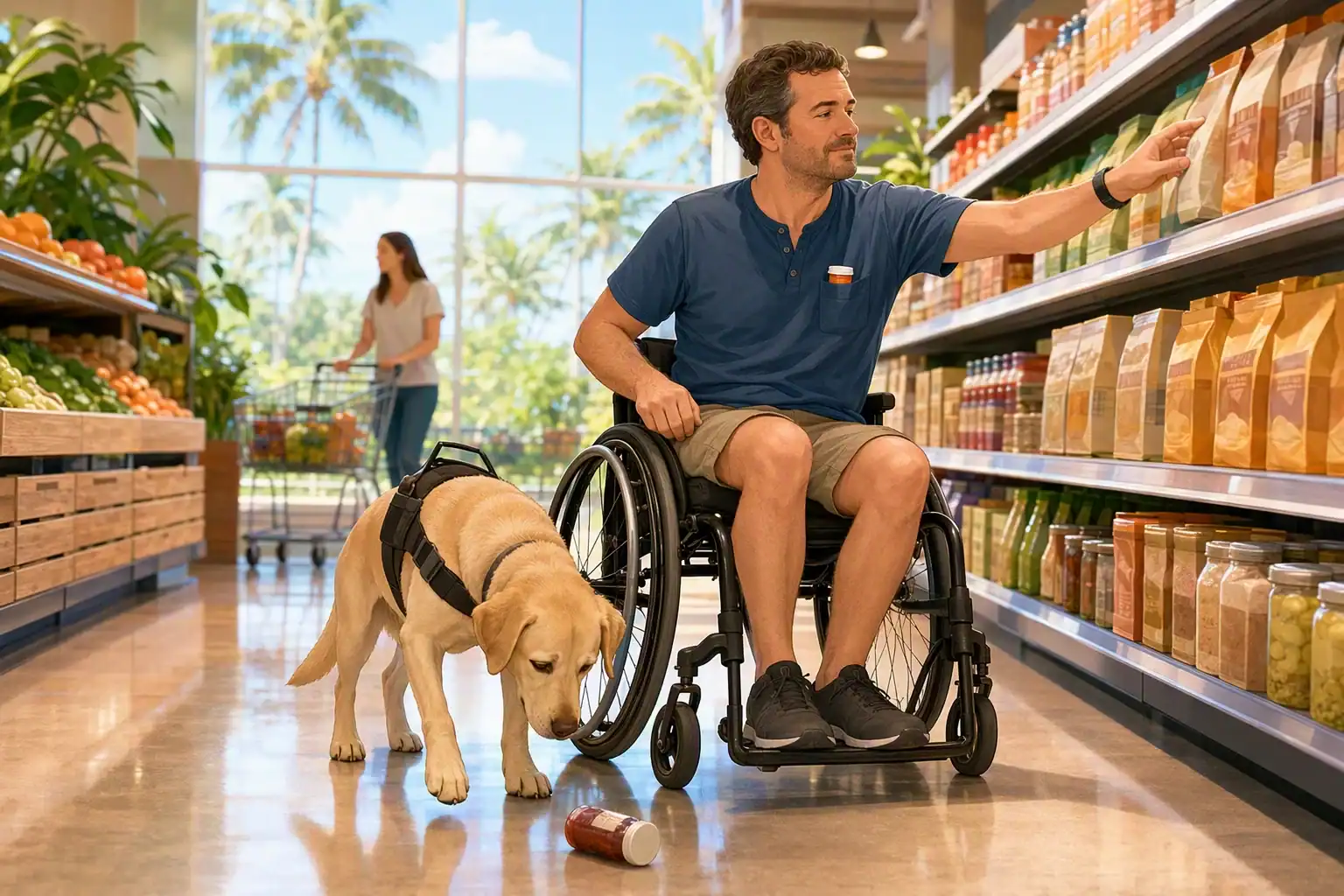
Ask yourself: “What specific action could a trained dog do that I cannot reliably do alone?”
Service Dog, Emotional Support Animal, or Therapy Dog?
| Animal type | Main role | ADA public access |
|---|---|---|
| Service dog | Performs trained disability-related tasks | Generally yes |
| Emotional support animal | Provides comfort through presence | No |
| Therapy dog | Comforts other people in planned visits | No |
A psychiatric service dog is different from an emotional support animal. It performs trained actions, such as alerting before a panic attack. Comfort alone does not meet the ADA definition, according to the Department of Justice FAQ.
You do not need an online certificate, vest, or ID card to make a trained service dog legitimate.
Also Read: News
Step 2: Define the Tasks Your Dog Must Perform
Turn Daily Barriers Into Task Statements
List the moments when your disability blocks a safe or needed action. Then turn each barrier into a clear, trainable task. Under the ADA service animal rules, the task must directly relate to your disability.
| Daily barrier | Clear task statement |
|---|---|
| You drop items from a wheelchair | Dog retrieves named items |
| You miss alarms or door knocks | Dog alerts you to specific sounds |
| Panic symptoms build quickly | Dog interrupts and guides you to a safe place |
- Write what triggers the task.
- State what the dog should do.
- Explain how it helps you function.
Comfort alone is not a task. A dog may calm anxiety, but it needs trained action, such as alerting or interruption, to qualify under the ADA.
Prioritize Safety, Reliability, and Handler Fit
Start with two to four tasks that matter most. Choose tasks you will use often and can safely handle.
- Put urgent needs first, such as seizure response, balance support, or exit finding.
- Be honest about your strength, mobility, home space, and ability to give cues.
- Tell the provider what a successful task looks like in real life.
A skilled dog must stay focused in busy Florida settings, including stores, clinics, and public transit. Genesis Assistance Dogs can use your task list to assess the right dog, training plan, and team fit.
Also Read: Home
Step 3: Find and Compare Reputable Florida Providers
Questions to Ask Before Submitting an Application
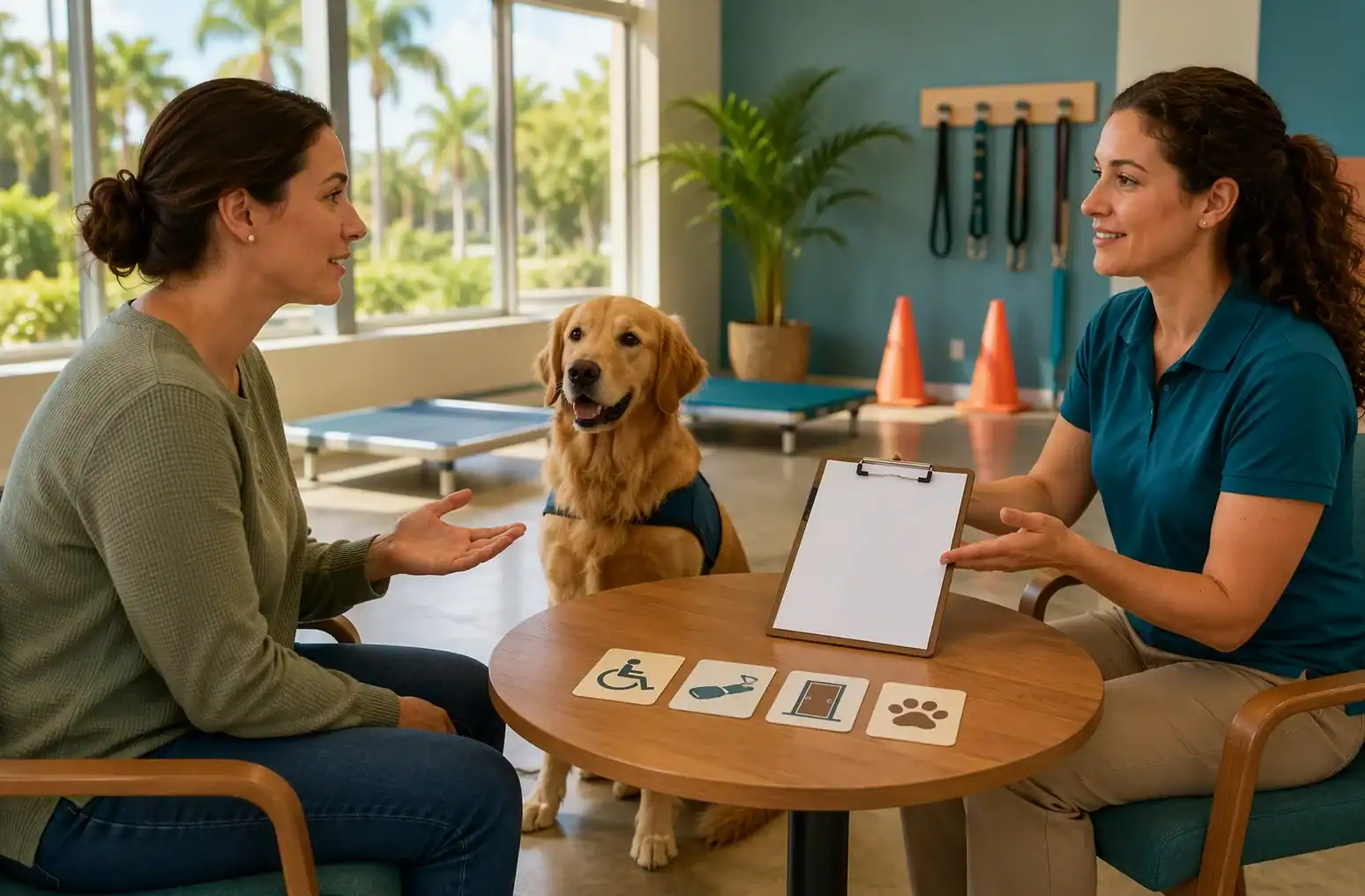
Compare providers based on fit, not a promise of fast placement. Ask:
- What disability-related tasks will the dog be trained to do?
- What health, temperament, and public-access standards do you use?
- What are the current wait time, fees, and funding options?
- Does your program include handler training, follow-up, and support after placement?
- Can you explain what happens if the match is not right?
Genesis Assistance Dogs should be able to explain its screening, matching, and lifelong team support in plain terms.
A legitimate provider will not sell you a required “service dog certificate.” Under the ADA, a service dog needs task training related to a disability, not registration, a vest, or an ID card. ADA guidance confirms this.
How the Application and Matching Process Usually Works
Most programs follow a similar path:
- Submit an application with disability needs, home details, and daily routines.
- Complete an interview, references, and sometimes a home visit.
- Join the waitlist while the provider selects or trains a suitable dog.
- Attend team training, then complete follow-up support after placement.
| Compare | Why it matters |
|---|---|
| Task match | The dog must address your real daily barriers |
| Training support | You need practice handling the dog safely in public |
| Post-placement help | Teams need guidance as life, health, or routines change |
A provider should match the dog to your needs, not simply place the next dog available.
Step 4: Prepare Your Application and Plan for the Timeline
What to Gather for the Application
Start a folder before you apply. Each provider sets its own rules, but most will need:
- A completed intake form
- A letter or records from a treating healthcare professional
- A clear list of disability-related tasks you need
- Details about your home, work, school, and support network
- References and consent forms, if requested
The task list matters most. Under the ADA, a service dog must perform work directly tied to a disability, as ADA guidance explains.
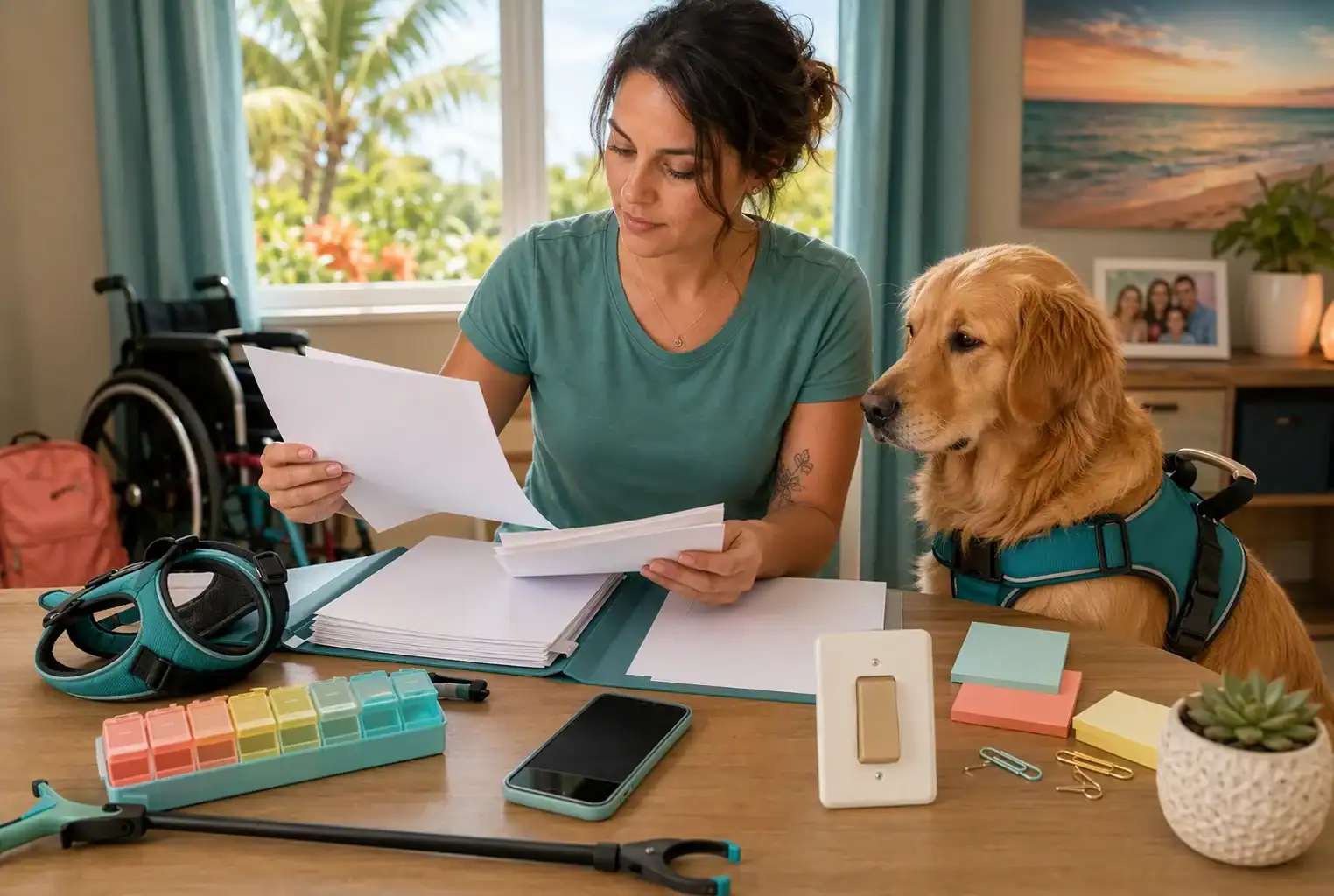
Keep copies of every form and email. Ask early if a provider has a waitlist, travel needs, or follow-up training requirements.
How Long Does Service Dog Training Take?
There is no single timeline. The wait can include breeding, puppy raising, advanced task training, matching, and handler training. Your needs, dog availability, and provider capacity all affect the date.
| Timeline stage | What you can do now |
|---|---|
| Application review | Send complete records and task details |
| Waitlist or matching | Update the provider if needs change |
| Team training | Plan time, transport, and caregiver support |
Do not buy a registration or certificate to speed up access. The ADA does not require service dogs to be certified or wear special ID.
Also Read: 2340
Step 5: Complete Training, Placement, and Ongoing Care
Team Training and Public-Access Readiness
Placement starts a working partnership. You and the dog practice task cues, daily routines, safe handling, and real-life trips together.
Focus on:
- Home routines, toileting, feeding, and rest
- Task work tied to your disability
- Calm behavior around people, carts, noise, and other dogs
- A plan for school, work, travel, or medical visits
Under the ADA, a service dog must be trained to perform disability-related tasks and stay under the handler’s control. Review ADA service-animal guidance before relying on public access.
A vest, ID card, or online registration does not create service-dog rights.
The Handler’s Long-Term Responsibilities
The handler, parent, or approved caregiver must meet the dog’s needs every day. Build these costs and duties into your plan:
| Responsibility | What it includes |
|---|---|
| Daily care | Food, exercise, grooming, and relief breaks |
| Health care | Preventive visits, vaccines, medication, and urgent care |
| Skills upkeep | Regular task practice and prompt support if problems arise |
Businesses do not have to feed, toilet, or supervise the dog. The handler remains responsible for care.
Contact your provider early if your health, housing, or routine changes. Small issues are easier to solve before they affect the team.
Also Read: 2324
Step 6: Know Florida Service Dog Rights and Avoid Registration Scams
Do You Need to Register or Certify a Service Dog?
No. Florida residents do not need to buy an online registration, ID card, vest, or certificate to gain ADA public-access rights. A service dog must be trained to perform tasks directly tied to a person’s disability. Professional training is not required either, though many handlers choose it.
The ADA’s service animal guidance confirms that certification, special gear, and registration are not required.
Avoid sites that promise to “make your dog legal” for a fee. Their papers do not create service-dog status.
Keep veterinary records and training notes for your own planning, not because a store or restaurant can demand them.
What Businesses May Ask and When Access Can Be Limited
If the dog’s role is not obvious, staff may ask only:
- Is the dog required because of a disability?
- What work or task has the dog been trained to perform?
They cannot ask about your diagnosis, demand records, or require a task demonstration. ADA rules generally allow service dogs wherever the public can go.
| A business may limit access when | What should happen |
|---|---|
| The dog is out of control and the handler cannot regain control | The handler may be asked to remove the dog |
| The dog is not housebroken | The handler may be asked to remove the dog |
| A sterile area would be compromised | Access may be limited to that specific area |
You should still be offered goods or services without the dog present.
Ready to explore a tailored service dog placement? Contact Genesis Assistance Dogs to discuss your needs, application steps, and lifelong support in Florida.
Frequently Asked Questions
Q1: What disabilities qualify me for a service dog in Florida?
A disability must substantially limit daily life, and the dog must perform trained tasks that help.
Q2: How long does it take to train a service dog in Florida?
Most fully trained service dogs need 18 to 24 months of training before placement.
Q3: Do I need to register my service dog in Florida?
No. Florida does not require registration, certification, or an ID card for a service dog.
Q4: What should I include in my application?
Explain your disability-related needs, daily routine, home setting, support system, and tasks you need the dog to perform.
Conclusion
A strong Florida service dog application starts with a clear need, not a vest or online certificate. Define the tasks that would help with daily life, check each provider’s fit and wait time, and plan for training, travel, veterinary care, and long-term handling.
Choose a program that assesses both the dog and the person. Keep records, ask direct questions, and involve your care team when useful.
A service dog must be trained to perform disability-related tasks. Comfort alone does not meet the ADA definition, and certification is not required for public access under ADA guidance.